Fantasy Baseball Advice

Archive for the ‘Hall of Fame Nominations’

Razzball 2009 Baseball Hall of Fame Ballot

January 11, 2009 By: Rudy Gamble Category: Hall of Fame Nominations, Rudy Gamble 1 Comment →

While ESPN gets 11 Hall of Fame ballots, Razzball doesn’t even get one.  Perhaps our invitation was forgotten by the same voter who forgot to add Rickey Henderson to the ballot (but remembered Matt Williams)?

Anyway, here is my ballot.  Click on the player names for my analysis:

Yes:  Rickey Henderson, Tim Raines, Mark McGwire, Bert Blyleven, Tommy John

Yes if they were actually on the ballot:  Dick Allen, Reggie Smith

No:  Obviously anyone not mentioned above.  But here are links to players that I reviewed in some depth…Jim Rice, Andre Dawson, Dale Murphy, Dave Parker, Harold Baines, Jack Morris

Apologies to Alan Trammell and Lee Smith as I didn’t get around to doing middle infielder and reliever posts.  My guess is that I’d have ended up voting ‘No’ on both.

And assuming that a lot more voters don’t forget Rickey, here is a little way to enjoy Rickey’s inevitably entertaining acceptance speech as well as our faux interview with him.

Bert Blyleven, Jack Morris,Tommy John – 2009 Hall of Fame Nominations

January 04, 2009 By: Rudy Gamble Category: Hall of Fame Nominations, Rudy Gamble 6 Comments →

In this series of Hall of Fame nomination-based posts, we’re going to focus on specific roles/positions.  We’ll be reviewing both players on the HOF ballot as well as non-HOFers who we feel deserve re-consideration.

This third post focuses on starting pitchers – with Bert Blyleven (61.9%), Jack Morris (42.9%), and Tommy John (29.1%) the three with the highest % of votes from last year’s nomination.  Before we even look at their stats (and those of other non-Hall of Famer contemporaries), we need to set the criteria by which to judge HOF-worthiness.  The criteria by which starters have been judged has been preoccupied by counting stats – primarily Wins but also Strikeouts tend to be considered (think Ryan, Carlton, part of Blyleven’s argument).  Let’s first review modern pitchers in the HOF to determine what criteria seems to define excellence – with a bias towards those that factor out the bias of era, park, and team performance.

Here are the stats for starting pitchers with 200+ Wins since 1956 who are in the Hall of Fame (this factors out Koufax who had only 165 Wins):

hof_pitchers_since_19561

The stats that best factor out the era/park/team performance biases are Quality Start % and ERA+.  Quality Start % is the percentage of starts that went 6+ Innings and gave up 3 or less runs.  While there is a bias here in that it was easier to give up 3 or less runs in ‘low offense’ years, it is a better statistic than Wins/Win % as it factors out team performance.  ERA+ or Adjusted ERA adjusts a pitcher’s ERA according to the pitcher’s ballpark and the ERA of the pitcher’s league (100 is league-average).  K/9 IP and K/BB ratio are good secondary measures to understand how dominant a pitcher was.  WHIP (Baserunners/9 IP) is a great stat but has to be used directionally since it isn’t adjusted like ERA+.

I created composite stats based on the top 1/3, middle 1/3 and low 1/3 of these players – e.g., if you divide these players into 3 tiers, 314 wins represents the floor of that 1st tier.

If we look at these starters, we see all have Quality Start %s over 60%.  ERA+ tends to be at least 15% above league average with Nolan Ryan, Don Sutton, and Catfish Hunter being the exceptions.  If we look at just these two stats, it seems fair to say that the most questionable modern pitcher in the HOF is Catfish Hunter.  His ERA+ of 104 is near league-average and that’s with less post-peak innings pitched than most since arm troubles and diabetes forced him to retire at 33.  While Sutton’s ERA+ isn’t very impressive, his Quality Start % (aided perhaps by Dodger Stadium) looks mighty impressive.  And Nolan Ryan’s strikeouts and no-hitters add enough intangibles to look past the ERA+.

So based on the above, let’s go with a 60% Quality Start % and a ERA+ of 115 as the tentative bar with Wins and K’s as secondary arguments.

Now, before we look at the eligible players, let’s apply this criteria against the dominant generation of pitchers that just retired or are nearing retirement:

200_win_pitchers_activeasof_2007

The pitchers that are HOF locks – Randy, Pedro, Clemens, Maddux, and Glavine – easily hurdle this 200 Win, 60% QS% and 115 ERA+.  I doubt I’ll be alone in marvelling at how impressive Curt Schilling and especially Kevin Brown stack up based on these criteria – if I’m still blogging in 5 years, expect me to be championing both their causes.  It’s also interesting how the two other players on this list discussed for HOF – Smoltz and Mussina – pass these criteria while the four below the mark (at least on QS%) are generally considered below the bar.  (Note:  For David Cone fans, he had 194 Wins, 120+ERA, and a 61.6% QS%.  Given the time lost at the tail end of his career due to his arm aneurysm, I can make an argument for him too…)

Okay, now let’s look at non-HOF pitchers since 1956 with 200+ Wins that are HOF-eligible (retired 5+ years):

non-hof_pitchers_with_200-wins

One last chart before I go into each player.  Since Wins are such a huge part of the debate, I calculated a metric called ‘Adjusted Wins’.  For all I know, some sabermatrician did this already so I’m not going to say I invented it.  To calculate ‘Adjusted Wins’, I first created a metric called ‘Wins Per GS / QS%’.  This takes the % of starts that were Wins and then divides it by the % of starts that were Quality Starts.  I ran this against the HOF bunch and it came out to an average of 73.1% (e.g., they had about 3 Wins for every 4 Quality Starts).  I ran this against the HOF-eligible pitchers and it came out to 74.4%.  Based on this, I created an Adjusted Win metric that is Quality Starts * 74%.

This metric has two inherent flaws:

  1. Not all Quality Starts are equal.  Giving up zero earned runs in 9 IP is much more Win-worthy than a 6 IP / 3 ER start
  2. It doesn’t account for era or park bias (like ERA+).  A Quality Start in a low offense era in a pitcher’s park isn’t as Win-worthy as the same one in a high offense era in a hitter’s park.

Nevertheless, I think this provides guidance as to whether a pitcher ‘deserved’ more or less Wins.  The ‘Diff’ column is positive (blue) if the Adjusted Wins are higher than actual Wins and negative (red) if the Adjusted Wins are lower than actual.

non-hof_pitchers_adjusted-wins

Bert Blyleven – 62.6% of his starts were Quality Starts.  His ERA+ was 115.  His K/9 IP is better than 8 of the 13 HOFers listed earlier (bested by Ryan, Carlton, Gibson, Seaver, and Bunning) and everyone on this list except Chuck Finley and Mickey Lolich.  His Wins per GS / QS% is at 66.9% which is well below the 74% average – leading to an adjusted win total of 317 (or 30 above actual).  The only arguments I can see against Blyleven is that he didn’t ‘dominate’ his time – e.g.,  never won a Cy Young (top 7 four times) and only 2 All-Stars.  I could see using this type of argument to separate borderline candidates but Blyleven is comfortably above the thresholds set by the pitchers already in the HOF.

Bert Blyleven on the TwinsBert Blyleven on the PiratesBert Blyleven on the Angels

Vote:  YES

Bert Blyleven loves to fartFun facts/anecdotes:  The first and only great baseball player to be born in The Netherlands – unless you count Andruw Jones (who was born in Netherland Antilles).  In 1986-1987 with the Twins, he gave up 50 and 46 Home Runs – setting a single-season record (50) and having the third highest total (Jose Lima’s 48 is 2nd).  As an announcer, Blyleven loves to drop the f-bomb and, based on the adjacent pic, we imagine he has no compunction about dropping a Dutch oven on his sleeping partner – proof you can take a man out of the Netherlands but you can’t take the smell if you’re trapped under the sheets when that man farts.

Jack Morris on the TigersJack Morris – The arguments for Jack Morris generally boil down to the following:  ‘Best pitcher of the 1980’s”, “Three World Championships”, and “Big-game pitcher”.  I imagine just about all the nominated Hall-of-Fame pitchers have similar superlatives.  The only difference is that their statistics are clearly superior to Jack Morris.

Of those HOFers, the best comparison seems to be Catfish Hunter.  Both were workhorses on generally good teams (Catfish won 5 Championships).  Neither were big strikeout guys (Catfish 5.3/9 IP, Morris 5.8 K/ 9 IP).  Both had ERA+s that are dangerously close to league average (Catfish 104/Morris 105).  Catfish had a -6 in Adjusted Win Difference (won 6 more games than predicted) while Jack has a -34 (which is only bested by David Wells and Kenny Rogers among pitchers shown above).  I’d argue here that Catfish shouldn’t be in the HOF rather than Morris should be in the HOF.

Let’s go back and compare him vs. the other non-HOF pitchers.  His 56.4% QS ranks him near the bottom of the list.  As does his 105 ERA+.  And I already mentioned that his Win total is arguably as inflated than any other pitcher with 200 Wins since 1956.  I don’t know…maybe he ‘gutted’ out a lot of 7 IP / 4 ER run games.  But is there an argument that he had more ‘guts’ than the rest of these pitchers?

As for playoffs, his career playoff stats are 7-4 with a 3.80 ERA.  Good, yes.  Great, no.  Four of these wins came in the 1991 Twins ALCS and World Series victories – the most famous of course being his 1-0 10 inning shutout against Atlanta in the 7th game.  No doubt this was awesome and extremely memorable.  He was also great for the 1984 Tigers going 3-0 with a sub-2.00 ERA.

Looking at those two playoff runs, you could forgive that he lost his only start for Detroit @ Minnesota in the 1987 ALCS (8 IP / 6 ER).  But how about his 1992 playoff run for the Toronto Blue Jays – a team that gifted him 21 wins with his 4.04 ERA/102 ERA+?  In 4 starts across the ALCS and WS, he went 0-3 with an 8.22 ERA.  Toronto beat Atlanta 4 wins to 2 – Morris lost both of those games.

I’m not saying Jack Morris was a bad playoff pitcher – it is that he is remembered as better because of selective memory.  For comparison sake, Dave Stewart went 10-4 with a 2.69 ERA during his playoff stints with Oakland and Toronto.  John Smoltz went 15-4 with a 2.65 ERA.  David Cone went 8-3 with a 3.80 ERA.  Roger Clemens – who isn’t particularly regarded for playoff dominance – has a 12-8 record with a 3.75 ERA.  Net-net, Morris was good in the postseason but not extraordinary (outside of that one start).

Lastly, I want to argue against the oft-repeated claim that he was the best pitcher of the 1980’s.  This ‘best in decade’ argument is arbitrary to begin with – Mark Grace has the most hits in the 1990’s!  Who cares?  You can take any ten year period and find stats like that – it doesn’t make it any more relevant.

best-pitchers-of-the-1980s1

In any case, while Morris had the most Wins in the 1980’s, he was not the best pitcher.  Dwight Gooden is clearly the best from 1984-1989 with a phenomenal 74.9% QS% and 132 ERA+.  Dave Stieb bests Jack Morris in QS% (60.7% to 59.9%) and crushes him in ERA+ (127 to 109).  Nolan Ryan, Fernando Valenzuela, Bob Welch, and John Tudor all best him in QS% and ERA+.

At the end of the day, an HOFer needs to exceed certain criteria in order to be enshrined.  Based on 60+ QS% and ERA+ 115+, Morris doesn’t really come close.  Based on all the other peripherals, he still doesn’t come close.  Just because there weren’t a lot of starters whose peak was between 1980-1985 doesn’t change the fact that Morris was a good-to-very good pitcher and NOT a HOF-caliber pitcher.

Vote:  NO

Fun facts/anecdotes:  Jack Morris was definitely the most feared pitcher in his day…..by females in the media – as evidenced by this Jack Morris 1990 locker room gem to Detroit Free Press writer Jennifer Frey:  “I don’t talk to women when I am naked unless they are on top of me or I am on top of them.”

Tommy John SurgeryTommy John / Jim Kaat – Tommy John – best known for a surgery (that really should be named after Frank Jobe who actually invented it) – often gets lumped in with Jim Kaat as both have 280+ wins and unimpressive winning percentages.  On first glance, it’s easy to disregard them as pitchers who just pitched for a long time.

But let’s dig deeper.  Tommy John has the edge on QS % (61.6 to 58.4) and adjusted ERA (110 to 107).  Neither had impressive K/9 IP ratios (both below 5) or WHIPS (both above 1.25).  Tommy John finished in the top 5 in league ERA 6 times, 4 time All-Star, and 4 times finished in the top 10 for Cy Young.  Jim Kaat finished in the top 5 in league ERA 3 times, 3 time All-Star, and finished once in the top 10 for Cy Young.

The most surprising difference between the two are their Adjusted Win Difference – while Tommy John has a +31, Kaat has a -13.  In other words, if both won 74% of their Quality Starts, Tommy John would lead in wins 319 to 270.  While Tommy John notably pitched for the successful late 70’s Dodgers and 1979-1981 Yankees, he also had a number of years with mediocre to bad teams ranging from the White Sox, Indians, Angels, and even the Yanks (in his second tour of duty). jim_kaat_1966_topps Jim Kaat spent the bulk of his career with the Senators/Twins (1959-1972) which had a number of strong Killebrew/Oliva led teams (incidentally, Kaat only led the team in ERA once during that period – Jim Perry had the top team ERA for 4 of those years).

I think the strongest argument against Tommy John is his 110 ERA+ and unimpressive WHIP.  Given his low K-rate, these stats aren’t that surprising.  But Tommy John was above average for enough years (besides the 61.6% QS%, he had 18 years with 150+ IP and 100+ ERA+, 13 years with 150+ IP and 110+ ERA+) that I think he warrants HOF nomination.  It’s a close call, though.

As for Kaat, he falls below both the QS% and ERA+ thresholds and there isn’t much of a secondary argument for him that I can see.

Tommy John Vote:  YES

Jim Kaat Vote:  NO

Fun facts/anecdotes:  Only Nolan Ryan (27 seasons) has pitched more seasons than John (26) and Kaat (25).  Tommy John was successful in getting a surgery named after him but was unsuccessful in getting investors to finance his self-named port-o-potty.  Jim Kaat finished his 25-year playing career with a 25-year broadcasting career.  He plans on spending the next 25 years being that old guy by the Little League field who provides unsolicited and oft-ignored advice.

Rick Reuschel / Orel Hershiser – Who would have thought that Rick Reuschel would have the highest QS % out of this group?  Not me.  I just remember him on the Giants later in his career when he could go a whole game throwing a variety of mediocre fastballs and still win games.  But there he is at the top with Orel Hershiser.

So both these guys pass the 60+ QS% threshold and by a significant amount (63.7% Reuschel, 62.9% Hershiser).  That’s at or above Steve Carlton!  In addition, both benefit from the Adjusted Win analysis that ekes up their Win totals to 249 and 217, respectively.

Their ERA+s fall just below the mark at 114 (Reuschel) and 112 (Hershiser).  Their peripherals are just so-so – both had high WHIPS (greater than 1.25) and average K rates (below 6.0).

At the end of the day, I’d say both of these guys were very good pitchers and probably underrated (especially Reuschel) but fall below HOF-caliber.  While Tommy John had 300+ Adjusted Wins, neither of these guys crack 250.  If you’re going to go in with a ERA+ under 115, you at least need longevity on your side.  For comparison’s sake, Tommy John had 700 GS.  Blyleven had 685.  Reuschel was at 529.  Hershiser only 466.

Vote:  NO

The Rest – No one else passes the QS % and ERA+ test.  No one besides Tanana even passes 250 Adjusted Wins.  All very good pitchers but none appear HOF-worthy.

Jim Rice, Andre Dawson, Mark McGwire – 2009 Hall of Fame Nominations

December 30, 2008 By: Rudy Gamble Category: Hall of Fame Nominations, Rudy Gamble 7 Comments →

In this series of Hall of Fame nomination-based posts, we’re going to focus on specific roles/positions.  We’ll be reviewing both players on the HOF ballot as well as non-HOFers who we feel deserve re-consideration.

This second post focuses on middle of the lineup hitters – with Jim Rice, Andre Dawson, and Mark McGwire being the highest profile of the bunch.

This marks Jim Rice’s 15th and last year of eligibility but momentum is on his side as 2008 marked a sizable jump in voter percentage from 63.5% to 73.2% (75% needed to get in). There’s also the fact that every other player who got 70% of the vote made the Hall of Fame.

After sifting through countless posts and articles on the subject, it appears there’s a rift between Boston and/or print journalists like Dan Shaughnessy who are pro-Rice and sabermetricians like Bill James and Rob Neyer who are anti-Rice. Jim Rice’s candidacy relies solely on his slugging as his speed and defense were below average. My POV is that this requires him to have been a clearly superior offensive force than his peers.  Since I’m comparing him to peers, I might as well analyze a whole bunch of sluggers at the same time (slugger loosely defined as 300+ HR) – even some that are no longer on the ballot (2008 % of HOF votes):

Jim Rice (73.2%), Andre Dawson (65.9%), Mark McGwire (23.6%), Dave Parker (15.1%), Dale Murphy (13.8%), Harold Baines (5.2%), Mo Vaughn (1st year), Juan Gonzalez (Still 2 years away), Dick Allen, Albert Belle, Dwight Evans, Darryl Strawberry, Jose Canseco, Fred Lynn, Reggie Smith, Jack Clark (all off ballot)

My analysis leans on the below.  I factored out any subjectivity like ‘reputation’ or how much someone was ‘feared’ as I wasn’t around for when most of these guys were at their peak:

  1. OPS+ and btWins – Both these stats are league and park adjusted so they create a level playing field. OPS+ is based on OBP+SLG.  btWins estimates the number of wins a player added relative to the league average hitter.
  2. 162 Game rates for HR/RBI/SB – So I didn’t get too lost in the abstract stats. Totals can be misleading so I focused on a per 162 game rate.
  3. MVPs/Top 10 MVP Finishes/All-Stars/Intentional Walks per 162 Games – To get a sense of their relative dominance during their era.
  4. Gold Gloves/Position – To get a sense of whether their defense provided additional value.
  5. Durability/Longevity – Looked at # of seasons and Plate Appearances/Season

Jim Rice, Hall of Fame Credentials

I’d say three of these hitters deserve to be the Hall of Fame – two of which are off the ballot and, for the most part, off the baseball radar.

Here are the players that get my vote (for whatever that is worth):Mark McGwire lounging while waiting for Hall of Fame

Mark McGwire – You can vote no because of the steroids but that’s the only possible reason to keep him out. Was he a so-so fielding 1B, slow, a bit fragile, and hit .263?  Yes, but he did two things awfully well – hit HRs and draw BBs. He ranks 4th all-time among 1B with 3000 plate appearances at OPS+ (Lou Gehrig, Albert Pujols, Jimmie Foxx are top three). He tops this group in every single stat except RBIs per 162 G (to Albert Belle).

Fun anecdotes:   1) Mark’s brother Dan was a 6′8″quarterback at San Diego State and was drafted in the 1st round of the 1991 NFL Draft by the Seahawks.  His pro career never took off.  2) The best way to treat backne is rice wine vinegar.

Dick Allen - bad mofo

Dick Allen - Allen was a 1B/3B/OF that played from 1963-1977 for the Phillies and several other teams. The biggest knocks against him are his counting stats/lack of longevity (15 seasons/351 HRs), his poor defense, and a bad reputation. But his 156 OPS+ is off the charts vs. these other players and points to the fact that playing in a pitcher’s era has dramatically suppressed his counting stats.  If you factor in era and park, Dick Allen was a much bigger offensive force than Jim Rice (or anyone else on this list aside from McGwire).

See here for an interestingly subjective and strong-worded critique of Dick Allen by Bill James and a VERY interesting long-form piece on Dick Allen by Craig R. Wright.  I went into Wright’s piece thinking that Dick Allen was an Albert Belle type.  After reading it, I think their only similarities are their performance at the plate and the fact they played under two first names (Richie/Dick, Joey/Albert.

Fun anecdote:  Dick Allen was treated roughly by Phillie fans during his tenure – enduring obscenities, racial epithets, and even heaved flashlight batteries.  While many outside observers suspected racism was behind this unwarranted treatment, their persistent criticism of Caucasian-American Mike Schmidt in the 1970’s/1980’s proved that the City of Brotherly Love was color-blind when it came to harassing and criticizing homegrown stars.

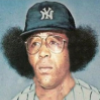
Reggie Smith on the Dodgers

Reggie Smith - A switch-hitting RF/CF who played from 1966-1982 for mainly the Boston Red Sox and Los Angeles Dodgers. Smith’s 137 OPS+ is above most of these players and his HR totals are suppressed because of his era and playing at Fenway (with most AB as a lefty) and Dodger Stadium. He was known for a strong arm and was good enough defensively to play about 1/2 his career at CF – a position where power numbers are much lower than the corner OF spots. There are only 8 players with 40% or more of their games at CF that have a better OPS+ than Reggie Smith. 7 are in the Hall of Fame (Mantle, Cobb, Speaker, Mays, DiMaggio, Hack Wilson, Snider). The 8th is Ken Griffey Jr. I’d say Reggie Smith is a borderline HOFer as a corner outfielder but his games at CF put him over the top.  It’s ridiculous that he only got one year on the ballot (after getting only 3 votes in 1988).

Fun anecdote:  Don Sutton and Steve Garvey got into a clubhouse fight in 1978 over comments by Sutton in the press that Reggie Smith was the Dodgers real MVP.  There are rumors, though, that this fight was spurred on by another Sutton quote, where he bragged, “I have a nicer perm than any of Garvey’s baby mommas.”

Here are the notes on the players that I vote thumbs down in order of how I’d rank them:

Albert Belle – Phenomenal hitter but he played only 12 seasons. Was bad in the field and an acknowledged asshole off of it. That’s the kind of thing that brings a borderline player down (vs. bump up a Kirby Puckett). But the fact he isn’t even on the ballot anymore – he got less than 5% of the votes in 2007 – is still ridiculous since he has a better case IMO than the guys below him on the spreadsheet.

Dale Murphy/Andre Dawson – Their OPS+ is just so-so for this list driven by their pedestrian OBPs (.346 for Murphy, .323 for Dawson). I boosted them on the lists because they put significant time in CF (Dawson played 1,027 games at CF), won a number of Gold Gloves, and had speed on the basepaths.

Anyone who watched Dawson play in the 2nd half of his career could see that the horrible Montreal turf probably robbed him of better stats.  I think what is less publicized – but brought up in this great piece by Baseball Dugout – is the fact that Dale Murphy came up through the minor leagues as a 6′5″ catcher.  Throw 400+ games as catcher and a decade at CF with almost no days off and it’s more understandable why he fell off so quickly in his early/mid-30’s.

Andre Dawson 1979 Topps

Dale Murphy 1979 Topps

Dale Murphy was undoubtedly a HOF CF player from 22-31 (a non-strike season average of 97/33/95/15/.281/.366/.510) but didn’t put together anything better than a league-average season thereafter (failing to clear a .252 AVG or .320 OBP  in 4 full seasons).  Much like Albert Belle, he probably needed 1-2 more peak seasons to warrant being voted into the HOF.  But he was so good in his peak and I can’t think of a CF in the past 30 years not named Griffey that could rival it.  I’d say Murphy is a ‘No’ but I could be convinced.

As for Dawson, his OBP is such an eyesore and his SLG wasn’t distinguished enough to counter it.  Dawson’s .323 isn’t even close to the lowest OBP for a HOF outfielder (Lou Brock – .343).   It’s a testament to the power of counting stats (he played 21 seasons) that he’s in contention vs. others on this list.

Jim Rice + Dwight Evans + Fred Lynn - 1975 Red Sox OF

Fred Lynn – While Rice may have been overlooked vs. Lynn when they first started, it’s the opposite since they’ve been retired. Fred Lynn’s stats at a season by season level don’t look as good as he was always battling injuries – e.g., only 2 100+ RBI seasons.  But he also was a better than average fielder (4 Gold Gloves) at CF. That lifts him above the rest of these players with comparable OPS+ but still falls short of HOF-worthiness.

Jim Rice / Dwight Evans - Let’s compare the two longtime Red Sox corner outfielders.  Jim Rice had the showier AVG/HR/RBI but Dwight Evans wasn’t that far off. The AVG advantage should be disregarded since Evans had the better OBP (.370 v. .352). He also was a 7-time Gold Glove OFer who was known for a cannon arm.  Rice’s appeal to voters comes from his RBI totals, his ‘feared’ reputation, and his MVP votes. His RBI totals are impressive but – it should be noted – are aided by being in a great lineup (finished in AL top 3 of ABs with runners on base 5 times b/w 1981-1986), a hitter-friendly park, and having a ton of plate appearances/season (hard to argue that Evans wouldn’t have put up similar RBI numbers if Rice and Evans switched lineup positions).  Rice’s ‘feared’ reputation is not backed up by his Intentional Walk stats which fall below most of the players on the list.

Yes, Rice was a great hitter but when you compare his stats in a fair way vs. peers (OPS+, btWin), he’s just middle of the pack among great sluggers. And with no longevity (if he hits 500 HRs, he’s a lock) or other credentials (like defense or speed) to speak of, he falls below everyone above him on the list.  It’s arguable that he was the 5th best outfielder to play for the Red Sox in the 1970’s (Yastrzemski, Reggie Smith, Fred Lynn, Dwight Evans).

As for Evans, he was very good but not great for enough years – but he would’ve warranted more than 3 years on the ballot (1997-1999) if he hadn’t been such a late bloomer (his HR/RBI splits were 150/514 in his 20’s and 235/870 in his 30’s – those totals in his 30’s are about even with HOFers Eddie Murray and Dave Winfield).

Dave Parker – A great player during his time (1 MVP, 5 top 10 finishes, 7 All-Star games) with a cannon for an arm in RF. But his OPS+ and btWin are towards the bottom of this group. How can you vote him over Lynn, Murphy, or Dawson who had comparable stats and played CF?

Jack Clark – Impressive OPS+ driven by a good eye (high OBP).  His totals suffer from playing almost exclusively in pitcher stadiums. Yes, he was fragile and doesn’t deserve to be in the HOF but he warrants more consideration than just 7 votes in his only year of eligibility (1998)

Juan Gonzalez – Hard to make a case for Jim Rice and then not pre-vote in Juan Gonzalez. Won 2 MVPs vs. Jim Rice’s 1. Has similarly impressive HR/RBI stats (aided by park and lineup) that, once adjusted, show Juan Gonzalez was slightly better (132 v. 128 OPS+, 2.5 to 2.2 btWin). Despite this, I put him this low on the list given his fragility and his defensive/baseruning liabilities.

Jose Canseco/Darryl Strawberry – Phenomenal power/speed hitters during their peaks. One career made by drugs. One career derailed by them.

Mo Vaughn – Better stats than I would’ve thought – especially that .383 OBP. But only 13 seasons and his offensive stats aren’t that distinguished to overcome the lack of longevity.

Harold Baines – Good player for a long time. His comparably low OPS+/btWin + only 1 top 10 MVP finish + all those years at DH put him at the bottom of this list.

Rickey Henderson, Tim Raines – 2009 Hall of Fame Nominations

December 29, 2008 By: Rudy Gamble Category: Hall of Fame Nominations, Rudy Gamble 4 Comments →

In this series of Hall of Fame nomination-based posts, we’re going to focus on specific roles/positions.  We’ll be reviewing both players on the HOF ballot as well as non-HOFers who we feel deserve re-consideration.

This first post will focus on leadoff hitters – in honor of two standouts:  Rickey Henderson and Tim Raines.  We’re also going to shine a belated spotlight on another 80’s/90’s leadoff hitter – Brett Butler.

Rickey Henderson (2008 % of Votes:  1st year on ballot)

This is a no-brainer. Rickey stealing third for the A's

Rickey topped .400 OBP in 15 seasons.  To put that in perspective, Lofton and Biggio managed that 4 times.  Ichiro managed it once.  Yes, Rickey stole a ridiculous 1,406 SBs but he also was successful above 80% of the time – a success rate that even Billy Beane would be happy with.  If that mix of OBP and speed wasn’t enough, he chipped in nearly 300 HRs.  Best leadoff hitter ever or, in Rickey’s words, Rickey “is the greatest.”

Vote:  YES

Fun anecdote:  Rickey’s got so many it’s hard to pick.  Let’s go with these two:

  1. When searching for a seat on the Padres team bus, he was told by Steve Finley, “You have tenure, sit wherever you want,” Henderson replied: “Ten years? Rickey’s been playing at least 16, 17 years.”
  2. Telling New York Yankees teammates that his condo had such a great view he could see the “Entire State Building.”

Tim Raines (24.3%)

Four things keep Raines from being a no-brainer selection:  1) The shadow of Henderson, 2) the anonymity of Montreal, 3) the lack of respect for leadoff hitters vs middle of the lineup hitters, and 4) the lack of respect for walks vs. hits.

Baseball fans are second to only John Cusack’s character in High Fidelity when it comes to compiling top 5 lists but here’s a doozy for you – name the top 5 leadoff hitters ever.  Rickey and then who?  Part of the reason for this is that some great hitters who start as leadoff are moved into the 2nd and 3rd slots.  Examples of high OBP/speed guys who started at leadoff and moved down the lineup include Rod Carew, Joe Morgan, and Barry Bonds.

Tim Raines on the ExposTim Raines runningTim Raines on the White Sox

Let’s use high OBP and above-average running as the two criteria we separate a good leadoff hitter vs. a good hitter.  Power is nice but not a prerequisite for a leadoff hitter.  Since the HOF is about longevity and performance, let’s focus on a counting stat and a percentage for each.  The below list focuses on players after 1930 who were not big power hitters (< 300 HR) that had at least 150 SBs (exception for Boggs) and 3,400 times on base (Hits + Walks + HBP).

Comparison of top leadoff hitters

Gwynn and Brock are both HOFers based largely on their 3,000 hits.  Raines is being questioned because he only had 2,600.  But Raines is ahead of both of them if you add H, BB, and HBP.  Raines and Gwynn are about equal in OBP and Raines was far superior to Lou Brock.  Raines’s OBP and SB ability separate him from everyone else below him on the list except for perhaps Ashburn and his impressive .396 OBP (and Ashburn is also in the Hall of Fame).

Raines also compares very favorably to Rod Carew (HOFer), Paul Molitor (HOFer) and Craig Biggio (surefire HOFer).  The only thing these three have over him is a couple more years of longevity.  And you can argue these were extended by occupying a power position in 1B, DHing and hanging around too long, respectively.

Based on the above, it is fair to say that Raines is arguably one of the top 5 actual or potential leadoff hitters as Henderson and Morgan are the only clear superiors in the past 70 years.  (I’d argue Boggs’ lack of speed makes him a better #2 hitter).  If we were talking about an arguably top 5 cleanup hitter, this wouldn’t even be a discussion.

Vote:  YES (see the excellent raines30.com if you need more convincing)

Fun anecdote:  In 1982, Raines snorted an estimated $40,000 in cocaine.  During the Pittsburgh drug trials in 1985, Raines testified that he only slid head first to not break the vial he kept in his back pocket which he didn’t want to risk stashing in his locker.  In a dubiously unrelated note, his nickname was ‘Rock’.

Brett Butler (Not on Ballot)

A top leadoff hitter of the 1980s and early 1990s, Butler got a grand total of 2 votes (0.4%) in his one and only year on the ballot.  It’s fair to say that Butler doesn’t scream ‘HOF candidate’.  He only made 1 All-Star game and finished in the top 10 for MVP only once.  He didn’t win any Gold Gloves.  If he was the ‘greatest’ at anything, it was bunting – with an unofficial modern record of 40 bunt hits in 1992 and the most bunt hits since 1960 (226).

Brett Butler on Bravesbrett butler on the indiansBrett Butler bunts on the GiantsBrett Butler bunts on the Dodgers

So we know Phil Rizzuto loved him (at least when he played in the American League).  Should he have received more MVP, All-Star, and HOF consideration love?  Probably yes on the first two but let’s focus on his HOF considerations.

You may have noticed Brett Butler’s name on the spreadsheet above.  I did another query of players since 1944 that are retired, not in the Hall of Fame, Total Times on Base > 3,000, and HR<250.  I then ranked it by OBP.  That’s a convoluted way of saying a player had longevity but wasn’t a power hitter.

Not in HOF, Times on Base>3000, HR < 250, Ranked by OBP

Comparison of Brett Butler

The only leadoff hitters higher than Brett Butler on this list are Tim Raines and Eddie “Walking Man” Yost – a 3rd baseman who played mostly for the Washington Senators and a Moneyballer 50 years before the term existed.

If we look at his career stats, we see he got started relatively late (first full-time season at 26) but was a consistently above-average leadoff hitter through 38.  He had 6 years over .390 OBP with 3 of them over .400.  That’s 2 more seasons over .390 OBP than Biggio and 4 more than Ichiro.  Devon White managed 3 All-Stars (plus 3 World Series Rings) and never cleared .342.

Brett Butler's Career Stats

Our end verdict on Butler, though, is a hesitant no.  His OPS+ of 110 would rank 55th out of 58 current OFs and that’s more of a condemnation of the three OFs below him (Brock, Max Carey, Lloyd Waner) than a compliment to Butler.  He stole 500+ SBs but  at a subpar success rate (69%).  Without the counting numbers (like 3000 hits or perhaps 4000 total times on base), we’d say he didn’t distinguish him quite enough for the HOF.

But he really deserved a lot more consideration than 2 votes in his single year on the ballot.  Perhaps Butler’s name will come back into the equation when Kenny Lofton is up for HOF consideration (Butler has higher Times on Base, OBP, and OPS+)

Vote:  NO

Fun anecdote:  Brett made enough connections while playing for the Dodgers in the early 1990’s to score a sitcom deal.  His show – Grace Under Fire – had an impressive 5-year run but was sadly derailed due to Butler’s painkiller addiction.